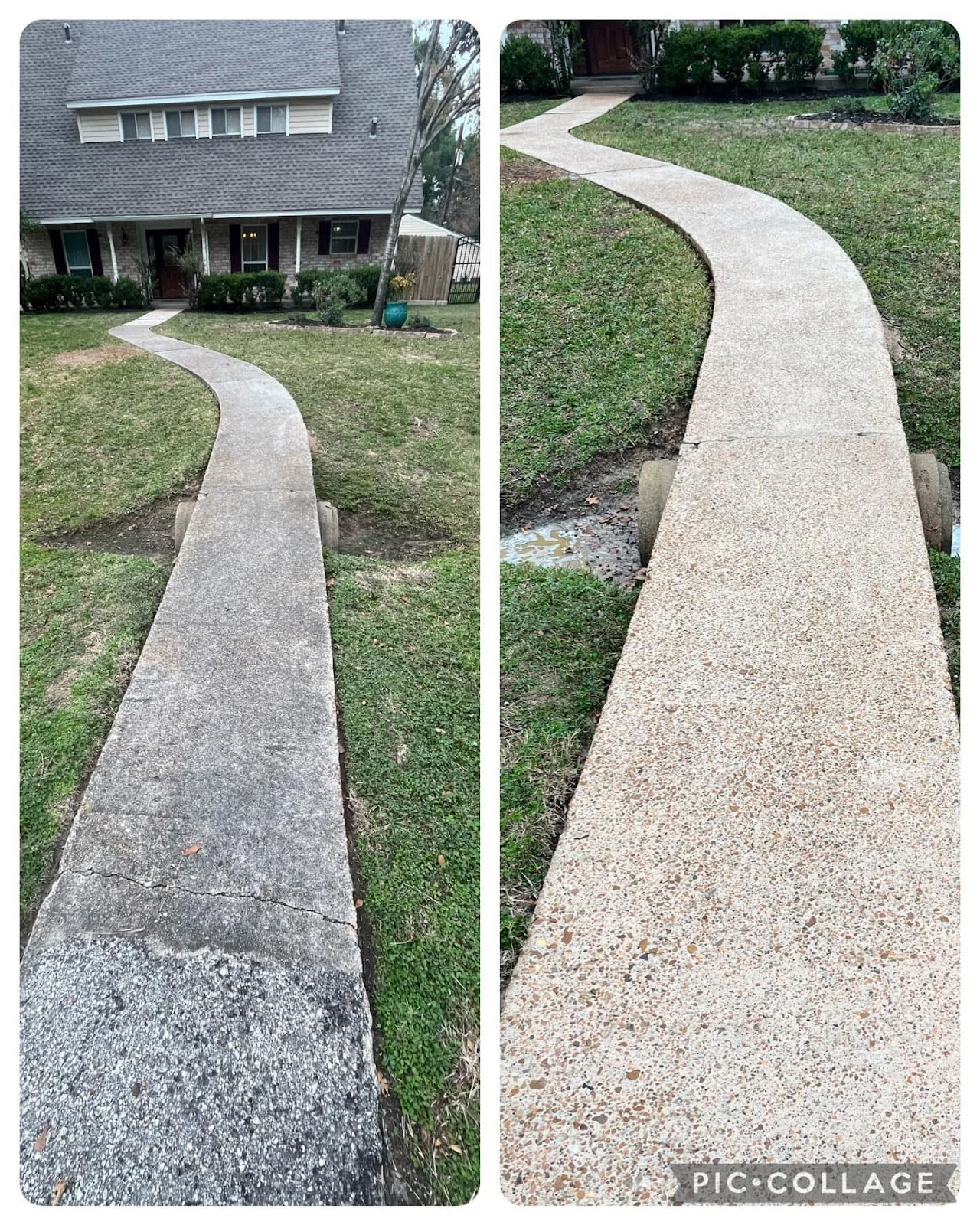
When you pressure wash concrete, water moving at 3000 PSI hits the surface and lifts dirt, algae, and stains in seconds. The problem is that most people either don't know how to control that force or they don't understand how concrete itself accepts water differently across its surface. The result is streaks, light patches, and that frustrating blotchy look that makes a clean driveway look worse than it started. After years of washing driveways and patios around Spring, I've learned exactly what causes those marks and how to avoid them.
Concrete Absorbs Water Unevenly
Concrete is porous, but not evenly. Some sections, especially older concrete, have been sealed or weathered differently. A spot that's been in shade for years absorbs water slower than a spot in full sun. When you blast with high pressure, water soaks into the softer areas faster, leaving darker streaks in the spots that dry slower. You have to account for this before you even turn on the machine. Walk your concrete first. Look for color variation. Note where shade hits and where sun beats down. That's your map for how you'll approach the work.
Pressure and Technique Matter More Than You Think
A lot of homeowners rent a 4000 PSI machine and assume higher pressure means better cleaning. That's backwards. For concrete driveways in Spring, 2500 to 3000 PSI is plenty. Going higher doesn't clean better, it just blows water deeper into the pores and creates those dark streaks as water pools in the subsurface. The real control comes from your angle and your movement. Hold the wand at a 45-degree angle, not straight on. Move in one direction, overlap your passes slightly, and keep a steady pace. Rushing or hesitating over a dirty spot will absolutely create a light patch because you're blasting that one area longer.
Start With a Surface Cleaner for Large Flat Areas
If you're cleaning a driveway or patio bigger than a few hundred square feet, a surface cleaner attachment is worth the investment or the rental cost. It's a flat tool with two spinning nozzles that keep pressure consistent across the width as you push it forward. You get even cleaning without the streaks because the pressure stays constant and the overlap is automatic. For smaller patios or spot cleaning, you don't need it. But for a 20 by 40 foot driveway, a surface cleaner saves you from spending three hours with a wand trying to match your hand speed to the water flow.
Detergent and Dwell Time Do Most of the Work
Here's what changes everything: applying a concrete cleaner and letting it sit. Detergent breaks down the oils and biological growth that pressure alone can't budge. Spray your cleaner on, let it dwell for 10 to 15 minutes, then rinse with lower pressure. The detergent is doing the actual cleaning. The pressure is just removing what's already loosened. This method means you use less pressure overall, which means fewer streaks. It also means you're not trying to force the water into the concrete to solve a problem that chemistry should handle. If you skip the detergent and just rely on pressure, you're fighting the concrete instead of working with it.
Drying Patterns Create the Final Look
After you rinse, concrete dries from the edges inward. If your concrete slopes toward the center or has low spots, water pools there and dries last, leaving darker marks. You can't always fix the slope, but you can be aware of it. If you see water pooling after the rinse, use a push broom to move it toward a drain. Also, avoid washing in direct sun if possible. Concrete that dries too fast can show mineral deposits or leave uneven color because the surface dries before the subsurface. Overcast days or early morning work gives you more time to work and a more even final result.
When to Call a Professional
Some concrete stains, like rust or oil, need specific treatments before you pressure wash. If you just pressure wash over them, you can actually spread them around and make the problem worse. Efflorescence, that white chalky residue, requires an acid wash before pressure washing. Algae and mold need a longer dwell time with the right cleaner. These aren't things you can figure out as you go. Getting it wrong costs you time and money in wasted cleaner and water. That's when it makes sense to call someone who does this work every week.
JR4U Pressure Washing serves driveways, patios, and concrete throughout Spring and the surrounding areas. We know the local climate, the water quality, and exactly how concrete here responds to different techniques. If you've got concrete that needs cleaning and you want it done right without the streaks, give us a call.