Pressure washing your roof is possible, but it requires knowing the right technique and when to say no to the job. Too much pressure and you'll strip granules from asphalt shingles, void your warranty, or worse, force water under the shingles where it causes rot. Too little pressure and you waste time and money. The truth is that most roofs in the Spring area don't need a pressure washer at all. What they need is the right approach for the type of debris and algae you're dealing with.
The Pressure Problem With Shingles
Standard asphalt shingles can handle some water, but they're not designed to take direct pressure. A typical pressure washer runs 3,000 to 4,000 PSI. Shingles start failing at around 1,200 PSI. Even if you think you're being careful, the spray pattern concentrates pressure in a narrow stream. You might think you're at a safe distance until you look at the shingle surface and see the granules gone. Those granules protect the asphalt underneath from UV damage. Once they're gone, your shingles age faster and fail sooner. In the Houston humidity, that's a real concern.
When Low-Pressure Washing Makes Sense
If you absolutely need to wash your roof, use a surface cleaner with a low-pressure nozzle, no more than 500 PSI. Even then, you're working at an angle, not straight on. You're also moving constantly, not dwelling on one spot. This approach works for light algae stains or pollen buildup. In Spring, where we see plenty of mold and algae from the humidity, low-pressure washing can brighten up a roof without causing damage. You'll see results, but they're subtle. If your roof looks like it's been neglected for years, low pressure won't restore it to like-new condition.
Soft Washing Is Usually the Better Choice
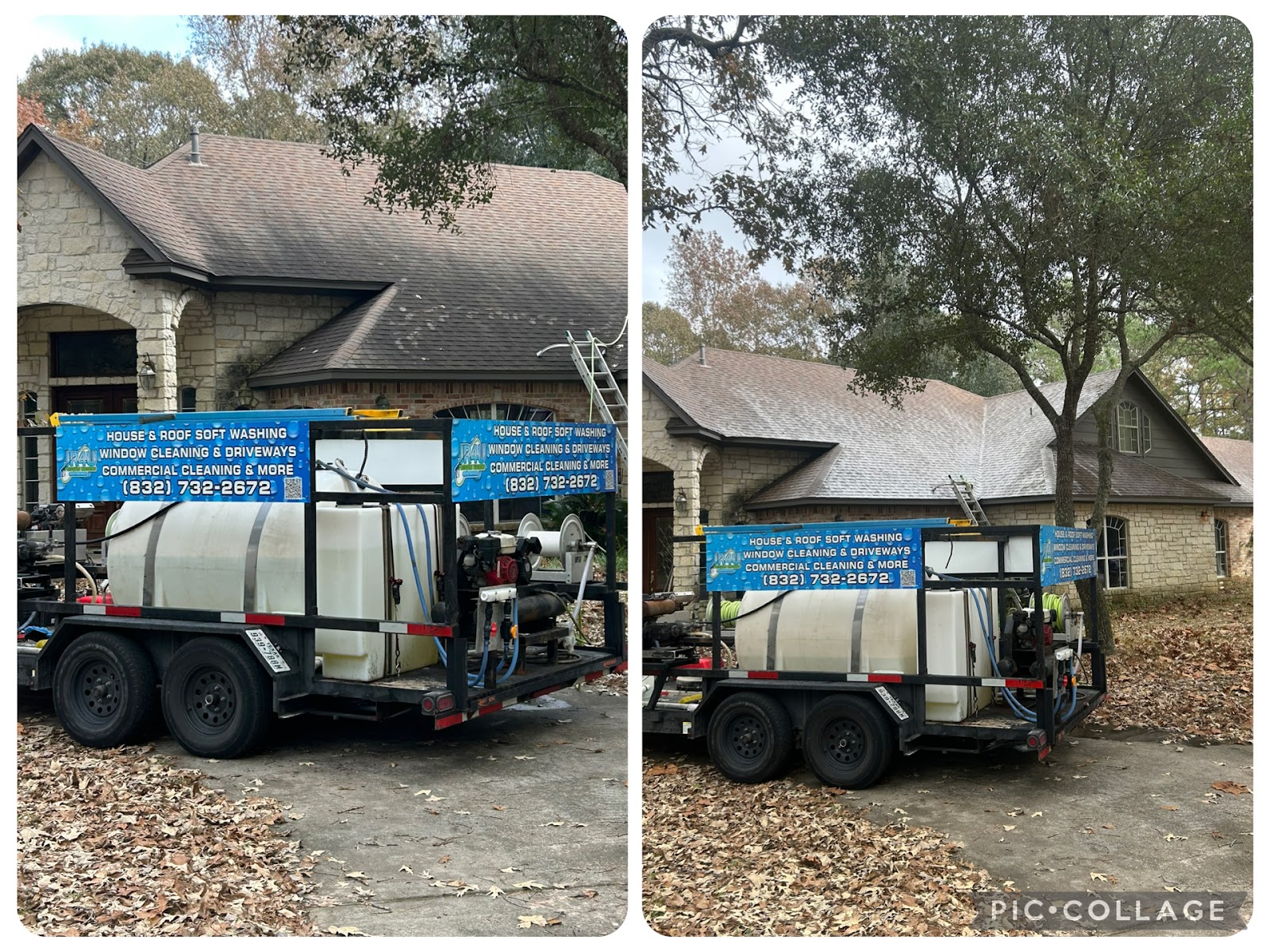
Soft washing uses chemical treatment with minimal water pressure, sometimes under 100 PSI. You apply a biodegradable cleaner that kills mold and algae at the source, then rinse gently. This method takes longer and costs more upfront, but it works on any roof material. Metal, tile, slate, wood shake, or asphalt shingles all respond well. The chemicals do the work, not the water. Your roof stays intact, and the results last longer because you've actually killed the organisms causing discoloration, not just knocked them loose. In the Texas heat and humidity around Spring, soft washing is often worth the investment.
What Happens When You Pressure Wash Wrong
I've seen homeowners try to save money by renting a pressure washer and doing it themselves. They underestimate the force or get tired and hold the nozzle too close. Shingles get torn back. Granules wash away in streams. Water finds its way under the shingles and sits in the decking. By the time they notice the leak, there's already mold growing inside the attic. Replacing a roof costs thousands. Repairing water damage inside your home costs even more. Your homeowner's insurance might not cover it if an investigator decides you caused the damage yourself. Most roofing warranties also specify that power washing voids coverage. That's not a risk worth taking.
The Real Solution for Spring Roofs
The best approach depends on what's actually on your roof. If you've got light staining or pollen, sometimes just waiting for a heavy rain does the job. If you've got genuine mold or algae that's not going away, call someone who knows how to handle it without destroying your shingles. They'll assess the roof material, the slope, the age of the shingles, and the type of growth you're dealing with. They'll choose soft washing, low-pressure rinsing, or just chemical treatment based on what your roof can handle. It takes experience to know the difference.
How to Know If Your Roof Needs Cleaning
Dark streaks running down your roof are usually algae or mold, not dirt. They feed on moisture and grow over time. If you ignore them, they spread. Green or black patches are the same issue. Moss is different, especially in shaded areas. It holds moisture against the shingles, which is bad. Pollen and dust just sit on top and wash away with rain eventually. If your roof looks dirty but it's just discoloration from pollen or dust, cleaning it might not add any real value. If there's active growth, that's worth addressing.
JR4U Pressure Washing serves the Spring area and knows the local climate and what roofs around here actually need. We can soft wash your roof safely or clean other parts of your home where pressure washing is the right tool. If you're wondering whether your roof should be cleaned and how, give us a call. We'll look at it and tell you straight whether it needs work or if you're better off leaving it alone.